


He had lived in Buenos Aires, Argentina, for many years, where he started his first plastic business in the early ‘60 among many organizational and technical challenges as plastic-made products were just becoming popular.
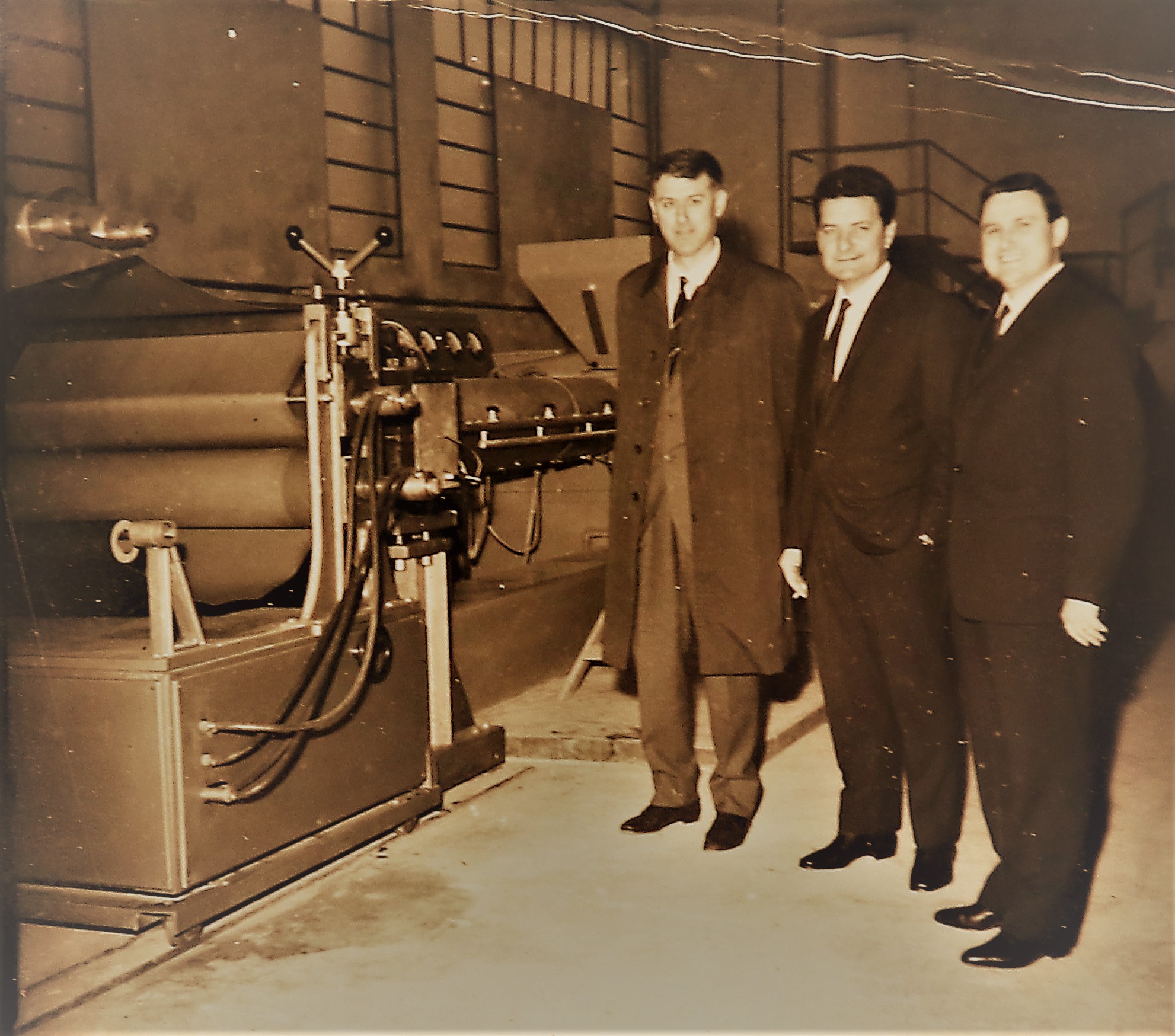
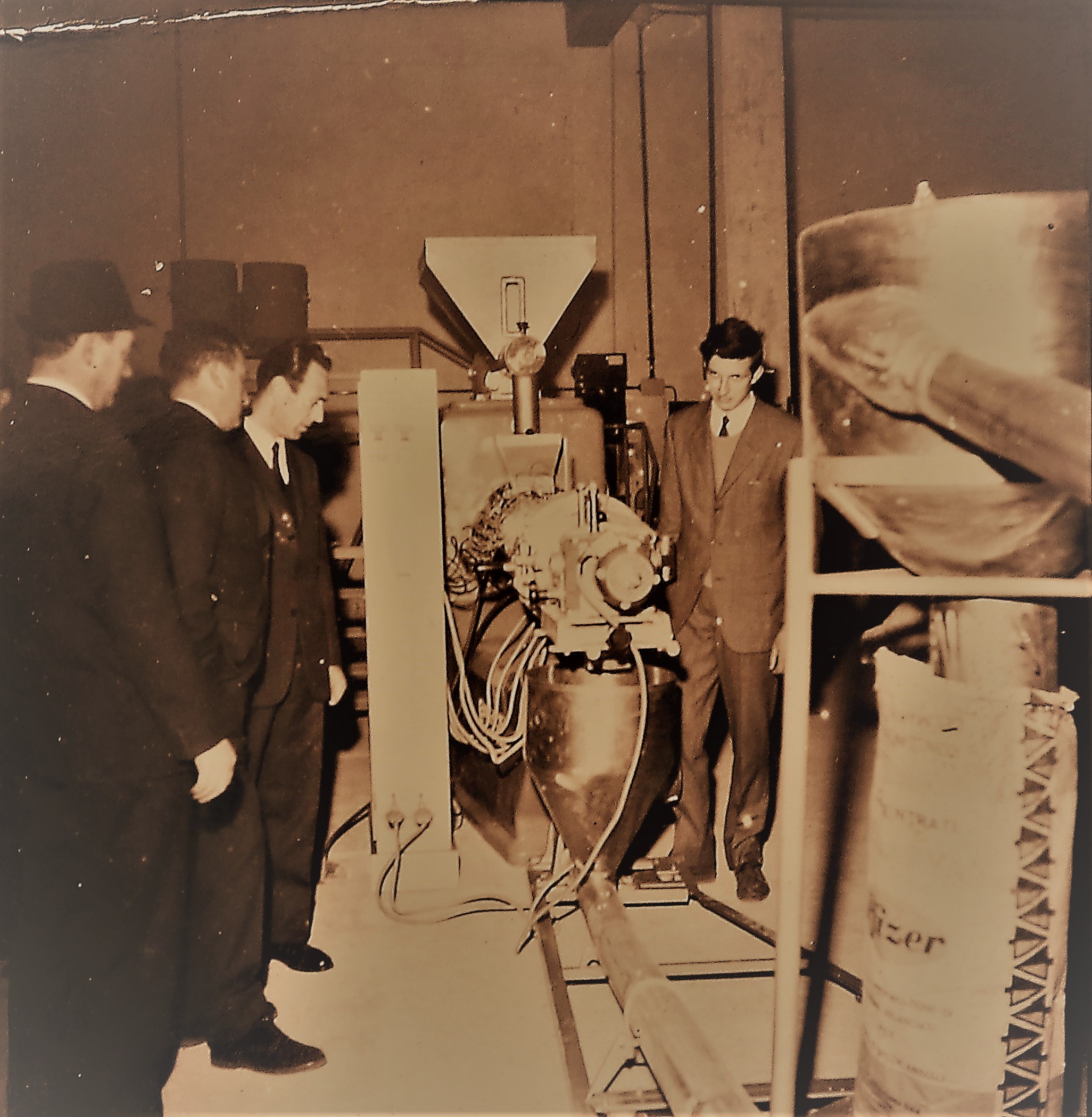
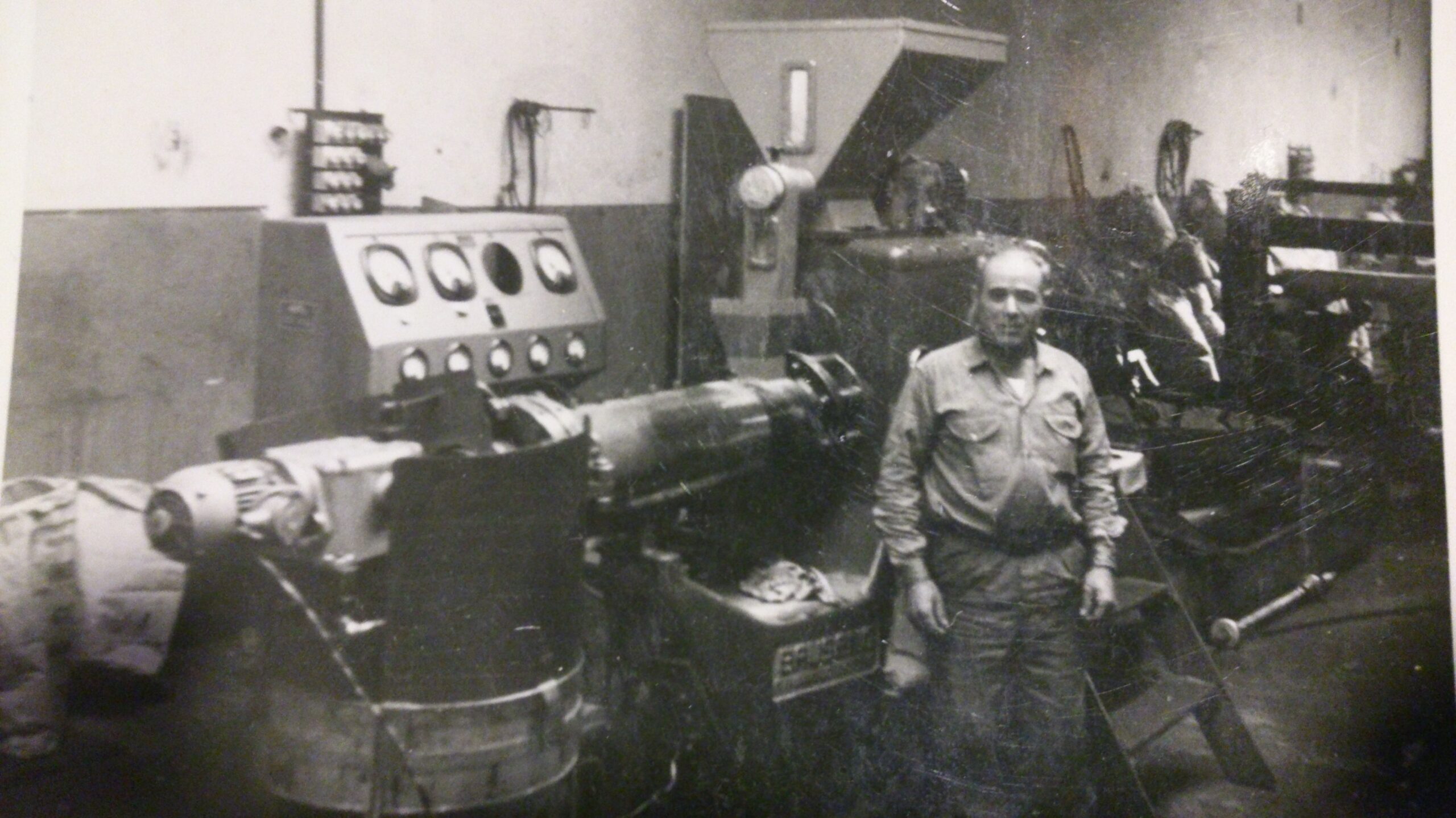
When he moved back to Italy, with far-sighted vision, he believed in the huge potential of the plastics as material to be used in different sectors. With very limited financial resources but bursting with ideas, he had started 3 companies in only 5 years, in the industrial district of Dosson di Casier, a few miles from the city of Treviso.
At the beginning of the ’70s, when the application of high impact Polystyrene was rapidly expanding, IMPA already held a dominant position in the Italian market.
In those early years, the main production consisted of extruding impact-resistant polystyrene coils for thermoforming. Later, sheet production was added, and later ABS was also developed.
The premature and sudden death of the founding partner, at just 54 years old in 1979, brought together the second generation with the arrival of his sons Renzo and Carlo Zanatta.
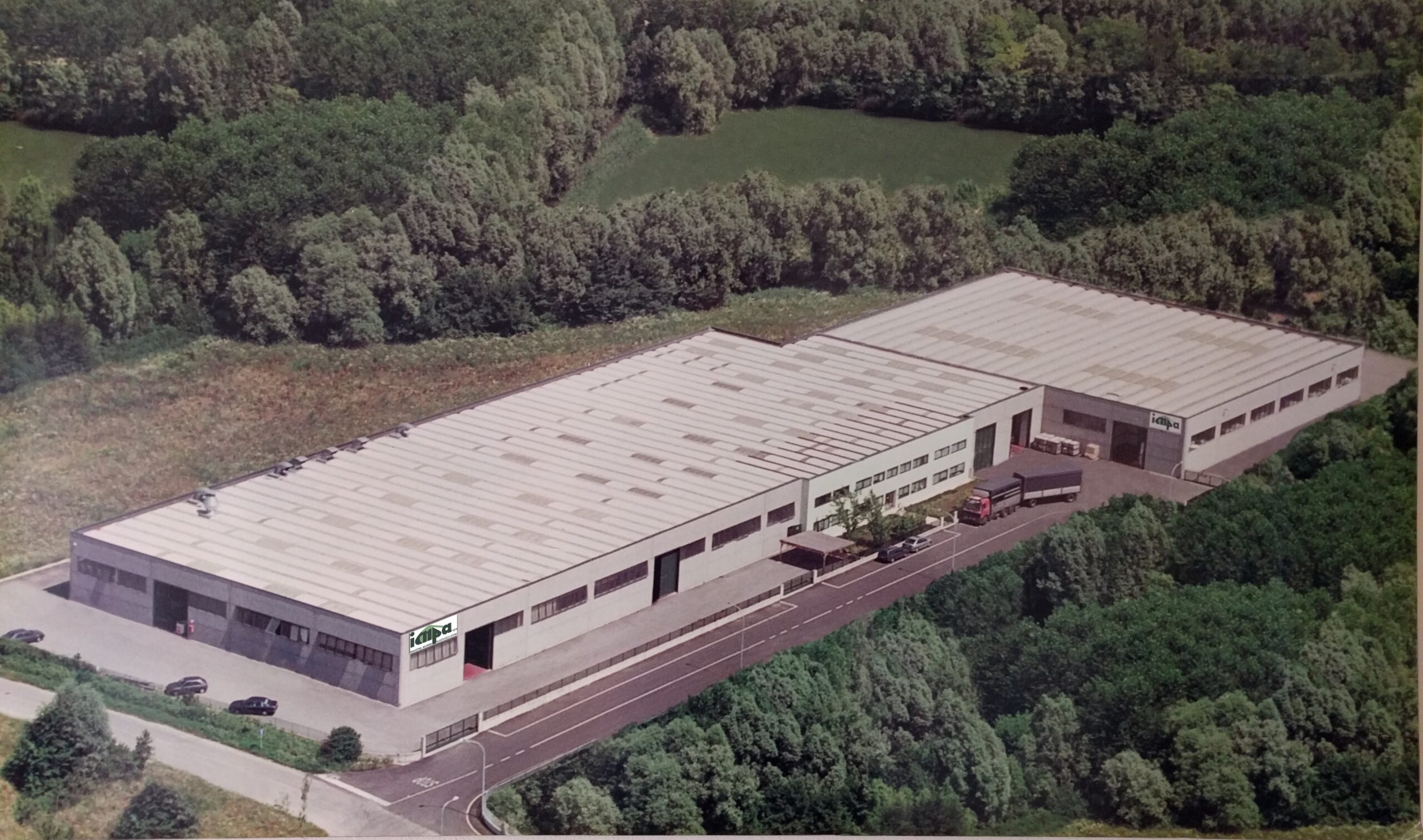
During the ’80s, the company consolidated its position in the Italian market and changed the corporate name from partnership (s.n.c) to Ltd. (S.p.a). The company grew steadily, domestically and abroad, and in 1993 it expanded its operations to a second manufacturing site in the nearby city of Casale sul Sile. In this period the company considerably invested on the expansion of PMMA-ABS coextrusion sheets, which became the most used product in the thermoforming of sheets.
Committed to providing high standard of services and products and to building close partnership with suppliers and customers; the company overcame the challenging years between 2009 and 2013, peak of the worldwide financial crisis. The company has continued to invest in new equipment and product development and increased its workforce.
From 2016 to 2026, the milestone of 60 years of activity found IMPA in full development of new projects and new goals, with the now concrete support of the third generation: Alberto, Maria Chiara, Nicola and Sergio.
[under construction]

IMPA has established the company’s mission statement basing on its organization, targets, dimensions, operations in connection with company activities and the impact of its activities and products on the environment.
This ensures a constant focus on customer satisfaction, continuous improvement in environmental performances and health and safety protection of the workers.
The integrated management system is in compliance with the following standards:
- UNI EN ISO 9001:2015 Quality management system
- UNI EN ISO 14001:2015 Environmental management system
- Decree Law 102/2014, implementation of the Energy Directive 2012/27/UE
- BS OHSAS 18001:2007 in conjunction with the UNI INAIL guidance on Health and Safety
The integrated management system is fundamental to support and develop these standards.
IMPA has established the following guidelines:
- Continually implement and maintain its integrated management system
- Work in accordance with the legislation for production and service and with Safety, Health and Environmental policies
- Ensure customer satisfaction delivering products that consistently meet customer requirements
- Monitor, track and report emission information, protect the environment and prevent pollution taking all possible measures
- Monitor energetic performance, protecting the environment, reducing energy usage and using renewable energies
- Work in partnership with customers, suppliers and employees in a transparent communication
- Continually improve service, product and system
Professionalism and seriousness guaranteed by ISO 9001 and ISO 14001 certifications
ISO 9001 – Quality Management system
ISO 9001 is the best known standard within the ISO9000 range, published by the International Organization for Standardisation (ISO), providing a number of quality management principles.
ISO 9001 is the international standard that defines quality standards for companies.
It guarantees a consistent and comprehensive response to customer expectations, an active, quality-driven organization that improves efficiency by reducing waste and avoiding errors that can lead to non-compliant products.
ISO14001 – Environmental management system
L’ISO 14001 is reknown as Standard for Environmental Management System certification for organizations of all sizes. Based on the “Plan-Do-Check-Act” methodology, it provides a systematic framework for the integration of environmental protection practices, preventing pollution, reducing waste, energy consumption and materials.
Manufacturers and end-users increasingly recognise the importance for the entire supplying chain to be in control of the environmental performances.
IMPA manages its business activities to address the environmental expectations of all its stakeholders. Its operations are designed in such a manner to preserve energy, economise materials, promote recycling and minimize emissions into water and air, in compliance with all the regulatory requirements.
Company policy
The Management, considering the organizational context, its strategic directions, its size, the operational implications related to the company’s activities and the environmental impacts of its activities and products, has established that the organization’s primary objectives consist of the continuous pursuit of maximum customer satisfaction and the continuous improvement of environmental performance and worker health and safety conditions.
By applying the concept of risk-based thinking, adopted when the Management System was adapted to the new ISO 9001:2015 and ISO 14001:2015 standards, the “Business Continuity Plan” was implemented, allowing our organization to understand its context and determine the external and internal factors that impact its ability to achieve established objectives. The document is the result of the analysis performed to determine the company’s organizational context, identify stakeholder needs and expectations, describe the company process map, and identify risks and opportunities that need to be addressed within the integrated management system and the resulting action plans.
Management considers the Integrated Management System in compliance with the UNI EN ISO 9001:2015 Standards for Quality, UNI EN ISO 14001:2015 for the Environment and UNI ISO 45001:2018 and UNI INAIL Guidelines for health and safety, together with the commitment of all members of the organization, a fundamental element for the achievement of these objectives and has established the following guidelines:
- maintain and improve our Integrated Management System over time;
- operate in compliance with legal provisions and all requirements governing our supplies to customers and environmental and SSL compliance;
- pay the utmost attention to customer needs at every stage of the product supply process;
- pay the utmost attention to customer needs at every stage of the product supply process;
- Seek new technological and management solutions to continuously optimize energy consumption;
- carry out an assessment of all health and safety risks associated with the company’s activities;
- train and inform all workers, with particular reference to environmental aspects and health and safety risks;
- ensure consultation with workers, including through their representative, on aspects of health and safety at work;
- carry out the design of workstations, operating methods and organizational aspects in order to safeguard the environment and the health and safety of workers;
- communicate transparently with customers, suppliers, workers and all stakeholders;
- promote individual responsibility, collaboration and sharing of goals;
- achieve economic results that guarantee profits that meet the owners’ expectations;
- seek continuous improvement of our performance.
The operational objectives and actions to achieve the goals of the Integrated Policy are defined annually during the management review.
Lughignano di Casale sul Sile, 05 january 2021

A story
that has lasted 60 years.
